
Last updated November 15, 2026
 Architectural shingles
 Metal roofing
 Tile roofing
 GAF
 Owens Corning
 Flat & low-slope
Free roof inspection with deck photos before we talk money - GAF and Owens Corning certified installation
Roof Repair Maintenance Checklist for Spring Valley Homeowners
The number-one cause of premature roof failure in desert climates isn’t storm damage. It’s deferred maintenance on flashings that have been thermally cycled hundreds of times before anyone looks at them. Spring Valley sits at elevation in the Mojave, and that means roofs here live a harder life than the climate guides account for: brutal summer UV, wide daily temperature swings, and a monsoon season that arrives with force. Most checklists you’ll find online are written for temperate zones and skip both failure modes that actually end roofs early in Spring Valley. This guide is built around what happens here, month by month and component by component, so you can tell what needs attention now and what can wait.
Quick Answer
A good Spring Valley roof maintenance routine means inspecting flashings around HVAC curbs, skylights, and parapet walls twice a year, clearing monsoon debris from drains and valleys before and after the July-September season, and checking gutters for granule buildup to catch UV-driven shingle wear early. Most of this you can do safely from the ground with binoculars; anything that requires walking the roof, resealing, or diagnosing an active leak should go to a professional. Documenting what you find matters as much as doing it, because maintenance records are what preserve manufacturer warranty coverage on brands like GAF, Owens Corning, and CertainTeed.
Styles & brands we work with
- Architectural shingles
- Metal roofing
- Tile roofing
- GAF
- Owens Corning
- Flat & low-slope
Table of Contents
- Why Spring Valley Roofs Fail Differently
- Flashing Inspection: HVAC Curbs, Skylights, and Parapet Walls
- Identifying UV Granule Loss Without Guessing
- The Post-Monsoon Checklist (July through September)
- What You Can Safely Inspect From the Ground
- Maintenance That Preserves Your Manufacturer Warranty
- Your Seasonal Maintenance Calendar
- When It’s Time for a Professional Assessment
Why Spring Valley Roofs Fail Differently
Spring Valley isn’t Phoenix and it isn’t the mountains. It sits in the southwest valley at an elevation that gives it cooler nights than the valley floor, and that gap between daytime heat and overnight cold is what drives roof wear here. Roofs expand in the afternoon sun and contract every night. Materials that handle steady heat well can struggle with hundreds of daily thermal cycles a year. The failures we see most in Spring Valley aren’t dramatic storm events. They’re slow: sealant that cracks at a metal flashing edge, shingle tabs that fatigue, and underlayment that dries out before its time.
Those cycles concentrate at every place the roof changes material or plane. A flashing transition between asphalt shingles and a metal vent stack moves differently than the field of shingles around it. When sealant is the only thing holding that joint, thermal movement wins eventually. That’s why this worksheet puts so much weight on the details rather than the broad flat surfaces.
The other piece is the desert sky itself. UV exposure here doesn’t let up, and it degrades the things that protect a roof invisibly: sealants, caulks, boot collars around pipes, and asphalt binder on shingle surfaces. A roof that looks intact from the street can have dried-out pipe boots that will leak in the first real rain. Maintenance is about catching those before they fail.
One more factor worth naming: dust. Spring Valley gets airborne dust settling on roofs constantly, and when the first monsoon rain hits, that dust becomes grit in gutters, valleys, and drains. It’s a small thing that turns into ponding water and debris dams if nobody looks.
Flashing Inspection: HVAC Curbs, Skylights, and Parapet Walls
Flashing is where roofs leak, and in Southwest desert construction there are three spots you should check every six months. In our experience, more Spring Valley leaks trace back to these penetrations than to any other single cause. None of them are hard to look at. They’re just easy to forget because they’re not visible from the driveway.
HVAC Curbs
Nearly every home here has rooftop HVAC equipment on a raised curb, and that curb is a continuous ring of flashing where roof meets metal. Check:
- The sealant line along the base of the curb on all four sides, looking for cracks wider than a hairline.
- The top edge of the curb flashing, where wind-driven rain can push under if the cap isn’t tight.
- Rust or pitting on the metal itself, which thins over time in a dusty desert environment.
- Any ponding or debris where the roof meets the curb. Debris holds moisture and the moisture attacks the sealant.
Skylights
Skylight flashing has the same thermal problem as HVAC curbs but worse, because the skylight frame and the roof move independently. Look at the sealant joint around the full frame, the flashing on the uphill side, and any bubbling or lifting of the metal. A skylight that shows moisture inside the glass on cold mornings is telling you something.
Parapet Walls
Flat and low-slope roofs with parapets have a weak point at the wall-to-roof joint, and in Spring Valley those parapet joints move a lot with the temperature swing. Check the coping on top of the wall, the flashing that turns up the wall face, and the sealant behind it. Wind-driven dust collects in that corner and holds moisture after a storm. If you see dark stains running down the wall, water is finding a path.
Identifying UV Granule Loss Without Guessing
Every asphalt shingle sheds granules over its life. Some shedding is normal. The problem is telling normal from UV-driven wear that signals the roof is nearing the end of its service life. In Spring Valley, UV is the dominant wear factor, so this matters more here than in cooler climates. Here’s a ground-based method that works.
The Gutter Method
- Check your gutters or downspouts on a dry day after a stretch of no storms.
- Brush a small amount of material from the bottom of a gutter, or catch what comes out at the end of a downspout, into your hand.
- Normal shedding is a light scatter of granules mixed with leaves and dust. You should see individual grains.
- UV-driven loss shows up as dense deposits of loose granules that look like coarse dark sand, enough that a small handful accumulates.
- Look at the shingles themselves from the ground with binoculars. Visible patches of the shingle mat or backing color, especially on south- and west-facing slopes, is the clearest signal.
The reason the gutter matters: granules concentrate there, and you’re catching the accumulated evidence of weeks or months of shedding rather than whatever a single storm knocked loose. South and west slopes take the most sun and will show wear first. If you compare those slopes to the north side, the difference is a good read on how much UV exposure your roof is absorbing.
What this tells you: heavy, consistent granule accumulation combined with visible shingle surface wear on sun-facing slopes means the shingle itself is degrading. That’s when you think about a roof replacement rather than another patch. Light, scattered shedding from an otherwise intact roof is normal and no cause for alarm.
The Post-Monsoon Checklist (July through September)
Spring Valley gets its water in a concentrated season, and the roof problems that follow are specific to those months. Most maintenance advice tells you to do a check in spring and fall. Here, the check that matters most happens in late September and October, right after the monsoon has passed. Here’s what to look at.
- Drains and scuppers: Dust and debris carried by the first rains can clog drainage and create ponding. Clear them before storms and again after.
- Valleys: The V-shaped valleys between roof planes collect debris pushed by wind-driven rain. Standing debris accelerates rot on the decking beneath and can back water up under shingles.
- Wind-lifted shingle tabs: Microbursts are the wind event here, and they lift tabs rather than tearing them off clean. Run your eye along ridge lines and eave lines for tabs that aren’t laying flat.
- Flashing joints affected by impact: After a storm, recheck every flashing sealant line. A joint that was marginal before the storm may have opened.
- Interior signs: Walk the attic and look for water staining on rafters, decking, or insulation. The leak may be far from where the stain shows.
- Gutter attachment: Wind and the weight of wet debris pull gutters loose. Check the fasteners.
The pre-monsoon check in June matters too, because you want flashings sealed before the storms, not after. And that late-summer storm season is also when you should get a roof repair scheduled promptly if you find something, since a small flashing leak left through the wet season does more damage in weeks than months of dry weather would.
What You Can Safely Inspect From the Ground
A big part of this checklist is knowing the line between inspecting and climbing. Desert roofs are dangerously hot most of the year, and steep-pitch shingle roofs are a fall hazard even for people who do it for a living. Here’s the practical split.
Safe From the Ground (with binoculars and a phone camera)
- Shingle surface condition on visible slopes, looking for missing tabs, curling, or exposed mat.
- Visible wear difference between sun-facing and shaded slopes.
- Gutter condition and clear granule accumulation.
- Visible flashing edges at HVAC curbs and skylights, using the camera zoom.
- Parapet wall condition on flat roofs, from a distance.
- Stains or streaks on fascia, soffit, and wall surfaces that suggest water paths.
- Interior attic inspection, which is always safe and often revealing.
Requires a Professional
- Walking the roof surface at any pitch.
- Removing or resealing any flashing.
- Diagnosing an active leak or tracing its source.
- Anything involving the roof deck, underlayment, or removal of material.
- Clearing debris from valleys or drains on a sloped roof.
The liability side matters. A homeowner who climbs a hot, steep roof risks injury, and a homeowner who applies their own sealant may void the coverage on that joint or, worse, seal in a problem. Comfortable distance work plus a documented list of what you see is the safe way to do your own maintenance.
Maintenance That Preserves Your Manufacturer Warranty
Shingle and roofing system warranties from brands like CertainTeed, Owens Corning, IKO, and Atlas have conditions attached, and those conditions mostly concern installation and maintenance. What that means for a homeowner is simple: keep records and let a qualified professional handle the work.
The conditions that most often matter:
- Installation by a qualified contractor. This is generally part of any material warranty, which is why the brand and the installer are linked. Roofing Spring Valley installs products from seven leading brands, so the system you choose and the crew that puts it on are aligned rather than split across suppliers.
- Maintenance documentation. Keep your inspection notes, photos, and receipts. If you ever make a warranty claim, the paper trail is what supports it.
- Unauthorized alterations. Resealing or modifying flashings, or adding penetrations, without the right method can be grounds to deny a claim on the affected area.
- Ventilation. Attic ventilation affects how the roof performs and how long the shingles last. If ventilation is inadequate, it shortens roof life and can complicate a warranty claim.
The practical takeaway: a documented inspection each year does double duty. It tells you what the roof needs, and it gives you the maintenance history that warranty claims depend on. Our Roofing Spring Valley team produces documented findings before any work begins, so a homeowner knows where the roof stands and what the record shows. If you’re considering an inspection, roof inspection is the right starting point before any material decision.
Your Seasonal Maintenance Calendar
Here’s the schedule that fits a Spring Valley roof, laid out as a numbered plan so you can work it into the year.
- Late winter (February-March): Ground inspection with binoculars. Check for winter storm wear, loose flashings, and any interior attic staining. This is your baseline for the year.
- Late spring (May-June): Pre-monsoon check. Clear gutters, drains, and valleys of dust and debris. Look at every flashing sealant line and note cracks. Book any repairs now, before the wet season.
- Mid-summer (July-August): After the first significant rain, walk the attic and check for leaks. Clear anything the storms deposited before the next round.
- Post-monsoon (September-October): The big check. After the season closes, do a full inspection of flashings, drains, valleys, gutters, and shingle condition. Look specifically for granule accumulation in gutters and sun-facing slope wear.
- Winter (November-January): Protect against the coolest nights. Check seals that have dried out through the summer, and watch for condensation internally that suggests ventilation problems.
This schedule gives you two repair windows (pre-monsoon and pre-winter) and two check windows (post-monsoon and winter) each year. If a small repair gets caught in a check window and fixed in the next repair window, that’s the whole system working.
Common Mistakes to Avoid
- Inspecting only the shingles, not the flashings. Most leaks in Spring Valley originate at flashings, not in the field of shingles. Check every penetration, and check the wall-to-roof joints as carefully as anything else.
- Climbing a hot roof to save a call. Desert roofs reach temperatures that will burn exposed skin and make a fall much more likely. Anything requiring climbing should go to a trained technician.
- Judging granule loss by one rainstorm. Some shedding is normal. Judge from the accumulated evidence in your gutters over weeks, and compare slopes. A single storm picture tells you nothing.
- Skipping the post-monsoon check. Most guides put the fall check too late or too early. The window after September matters here because that’s when storm-raised issues surface.
- Sealing a flashing without diagnosing the leak. Hiding a leak under fresh sealant is worse than not touching it. You need to find where the water comes from and fix the cause.
- Not keeping records. Warranty claims get denied on missing maintenance history. Keep notes on date, what you found, and what was done.
- Ignoring the attic. Interior signs of water are often your first and only warning before decking damage. Walk the attic after every rainy period.
- Never getting a professional baseline. A documented professional inspection gives you a starting point and a paper trail. First-time maintenance should start there.
See the difference
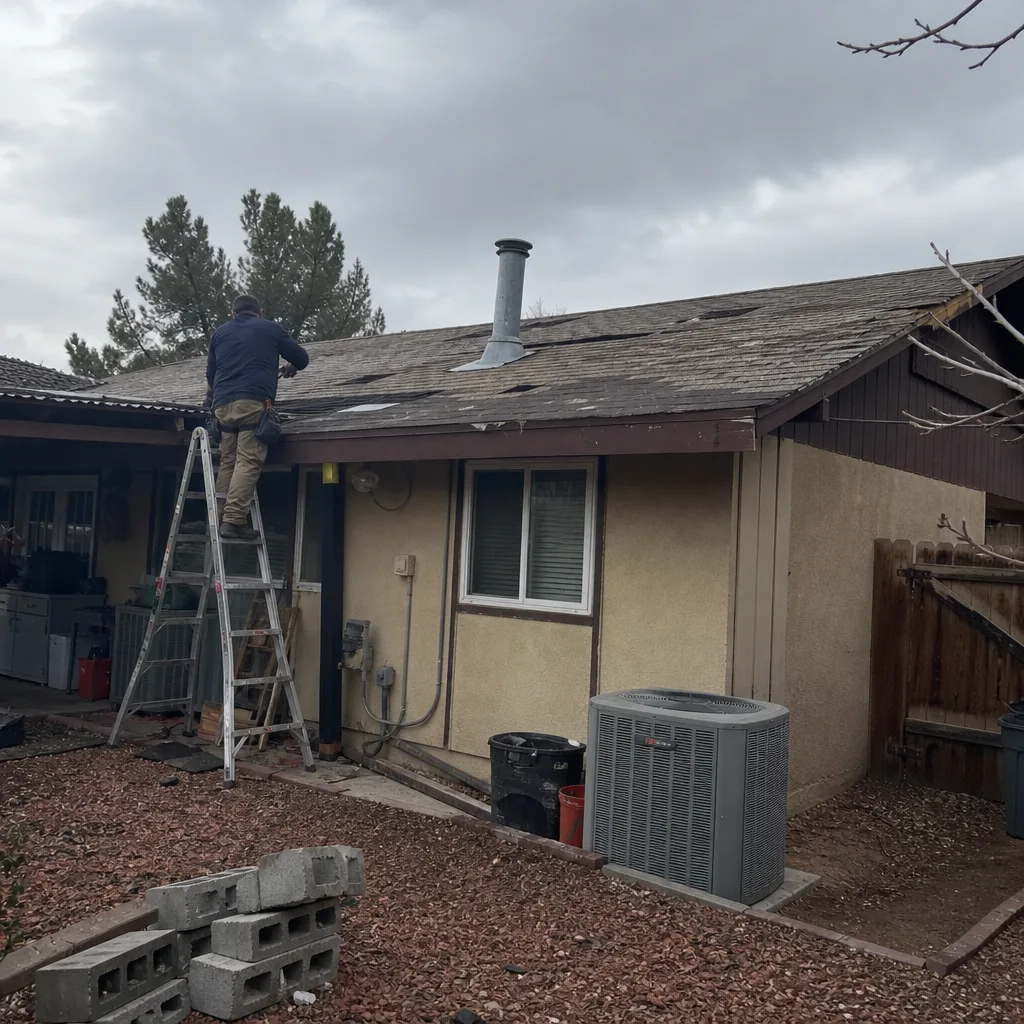 Before
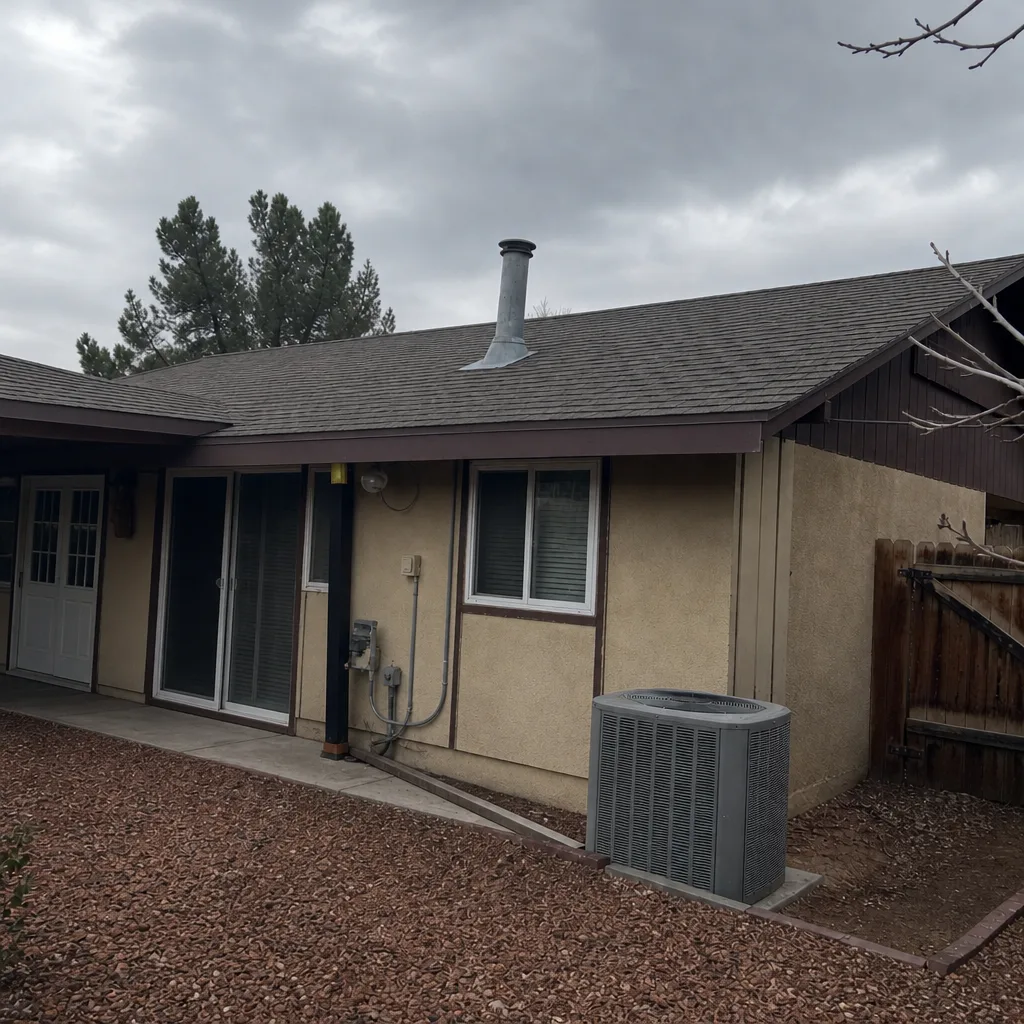 After
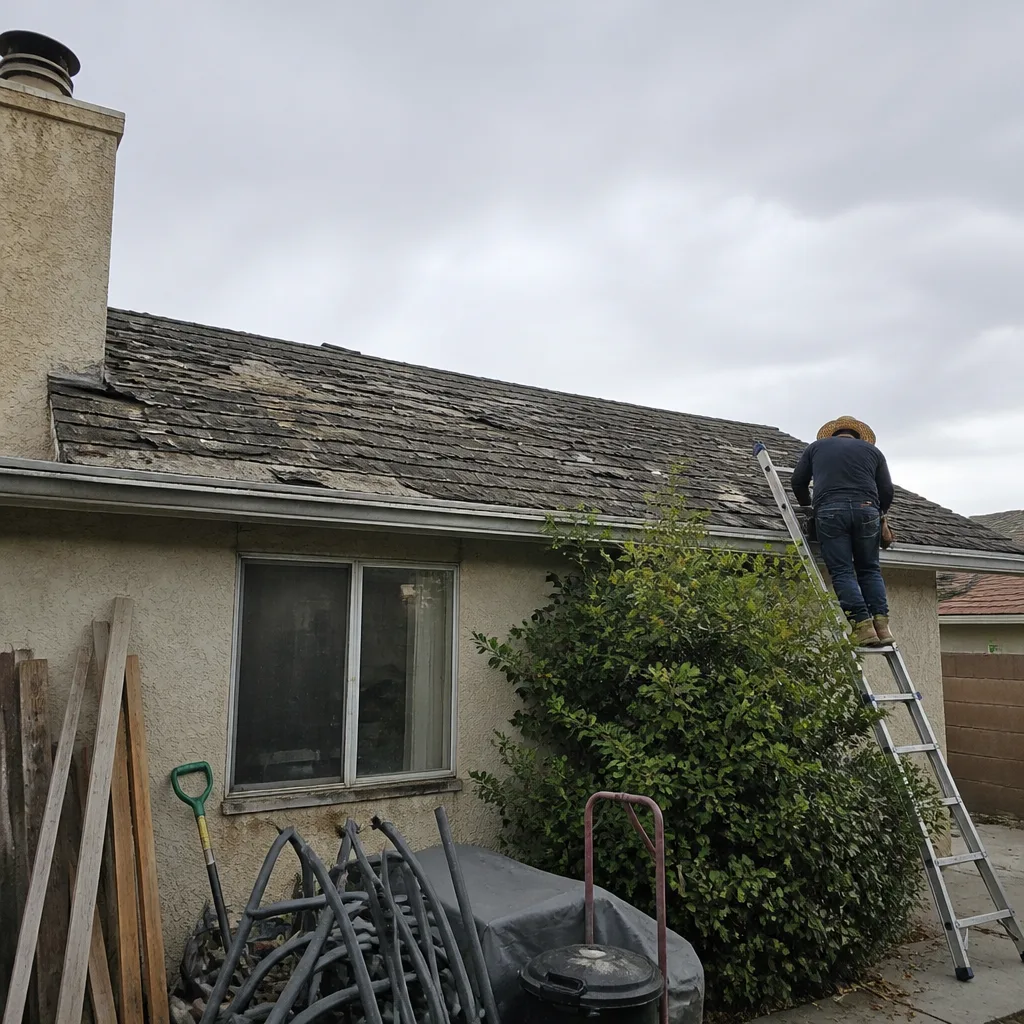 Before
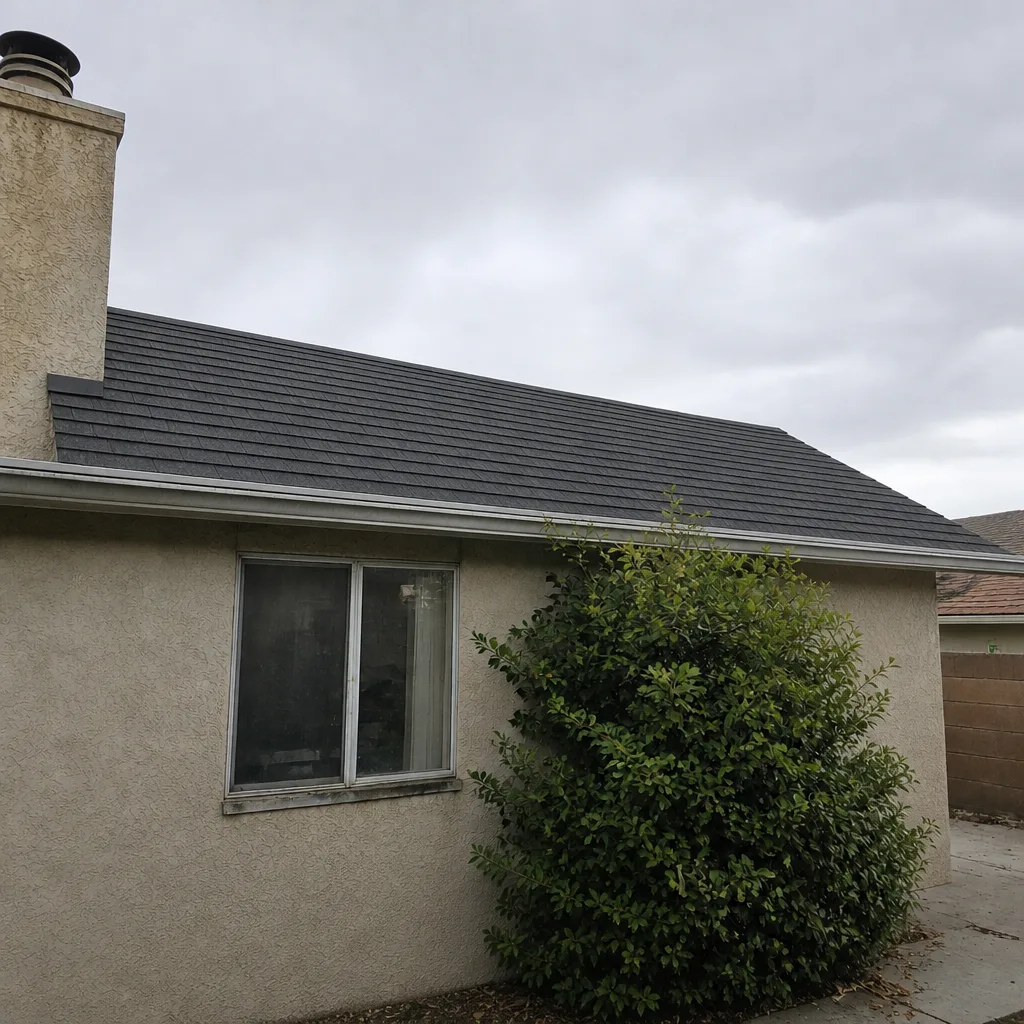 After
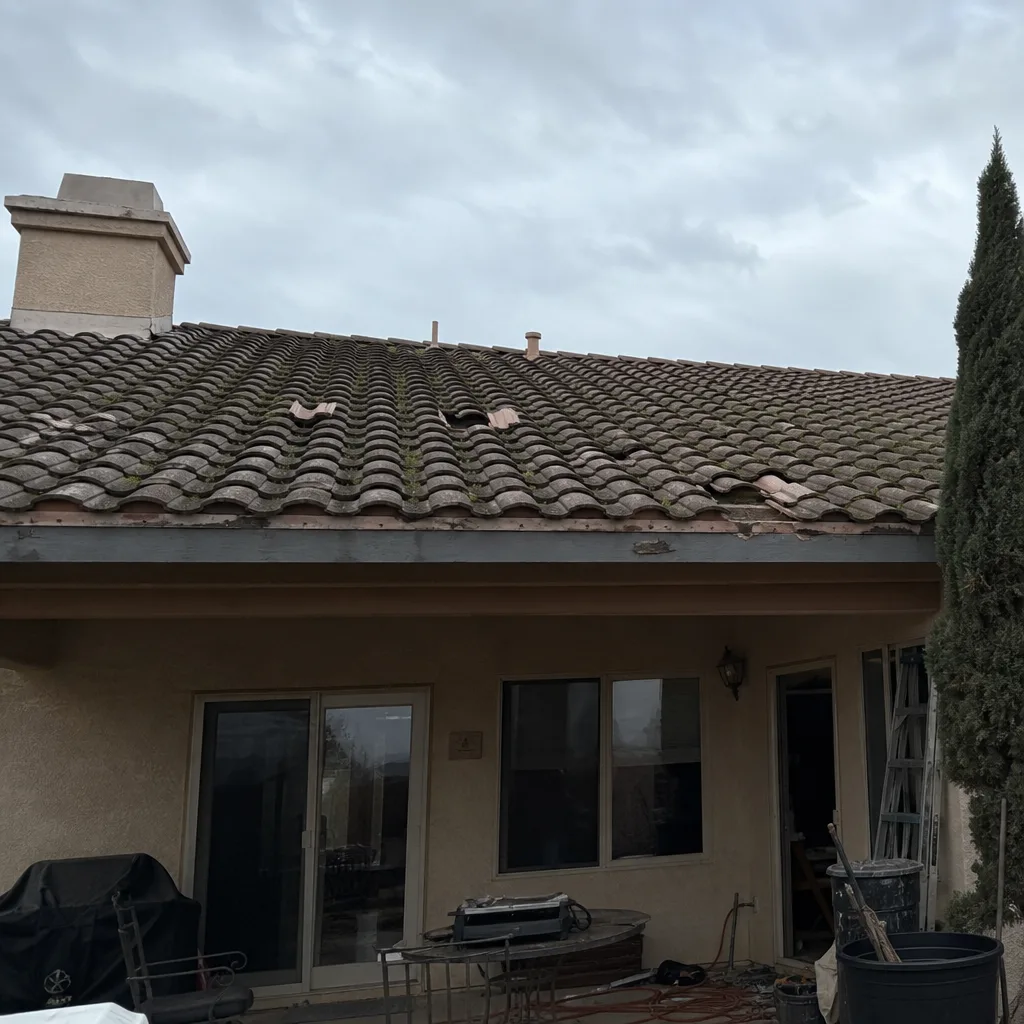 Before
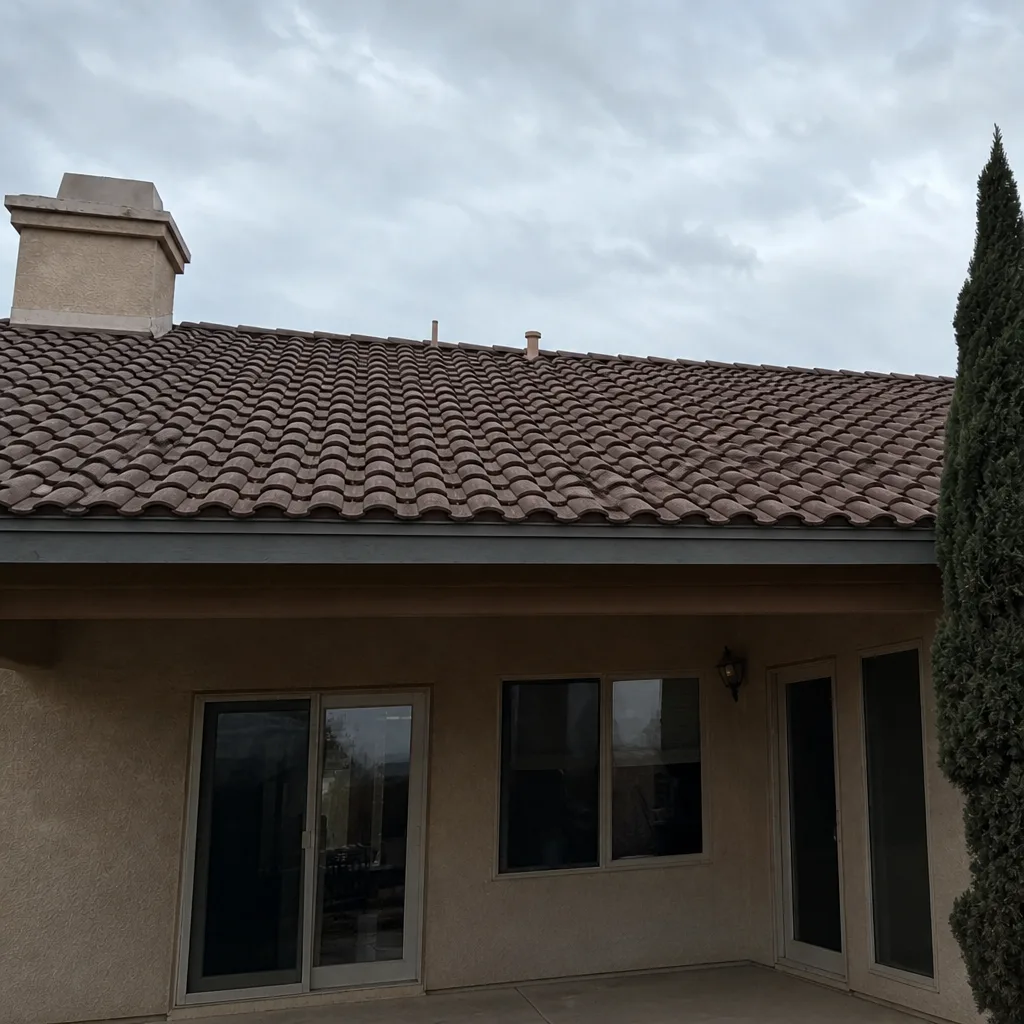 After
When to Call a Professional
Some roof maintenance is ground-level common sense. The rest needs a trained eye. Call a professional if you find any active leak, water staining in the attic, visible damage to flashing, or shingle surfaces showing exposed mat on sun-facing slopes. Call if you’re not sure whether granule accumulation is normal. Call if your roof is approaching the end of its service life and you’re weighing repair against replacement, because the brand and system choice is part of that decision. Roofing Spring Valley offers free estimates in Spring Valley. Call (877) 851-0738 to schedule a documented inspection and get findings before you spend a dollar.
Frequently Asked Questions
Twice a year, at minimum: once in late spring before the monsoon season, and once in the fall after the storms have passed. Ground-level checks after any significant rain are wise too, and a professional inspection should happen annually even when nothing looks wrong, because the inspection produces documentation that supports any future warranty claim.
Flashing failure, especially at HVAC curbs, skylights, and parapet walls, where the sealant is thermally cycled and eventually cracks. Roofs here also suffer UV-driven granule loss on south and west slopes before showing obvious wear on shaded sides. Both are maintenance items rather than storm damage, and both are catchable early from the ground.
Check your gutters after a dry stretch. A light scattering of granules mixed with dust is normal. Dense, sand-like deposits in gutters or downspouts, combined with visible shingle surface wear on the sun-facing slopes, indicate UV-driven degradation. Get an inspection if you’re seeing that combination.
Ground-level inspection, attic checks, gutter clearing from a ladder, and recordkeeping are all safe for a homeowner. Anything requiring walking the roof surface, resealing flashing, or diagnosing a leak should go to a professional, both for the safety risk in desert heat and because correct work on the flashing is what preserves product warranty coverage.
Yes. Manufacturing systems from brands like GAF, Owens Corning, and CertainTeed generally require installation by a qualified contractor and supported maintenance. The homeowner’s job is to keep records of what was inspected and when, so a future claim is backed by documentation. A professional inspection each year is the simplest way to build that record.
Drains and valleys for debris, ridge and eave lines for wind-lifted shingle tabs, all flashing sealant lines for cracks or lifting, gutters for granule accumulation, and the attic for any water staining. Start with the ground and attic, and call a professional for anything that requires climbing or resealing.
The Bottom Line
Spring Valley roofs fail on the details, gradually, before they fail big. The checklist that actually protects them is built around thermal cycling at the flashings and UV wear on sun-facing slopes, with a post-monsoon inspection that matters more than the spring and fall cadence of temperate climate guides. You can do most of the checking safely from the ground and in the attic. The rest needs a trained professional who can walk the roof and document what they find. Roofing is the only trade we work in, from repair and replacement to inspection, and we install products from seven leading brands so the recommendation fits your roof and budget. Call (877) 851-0738 for a free estimate. We answer 24/7, with fast dispatch from 7am to 7pm, Sunday through Friday.
Written by the team at Roofing Spring Valley.