
Last updated November 15, 2026
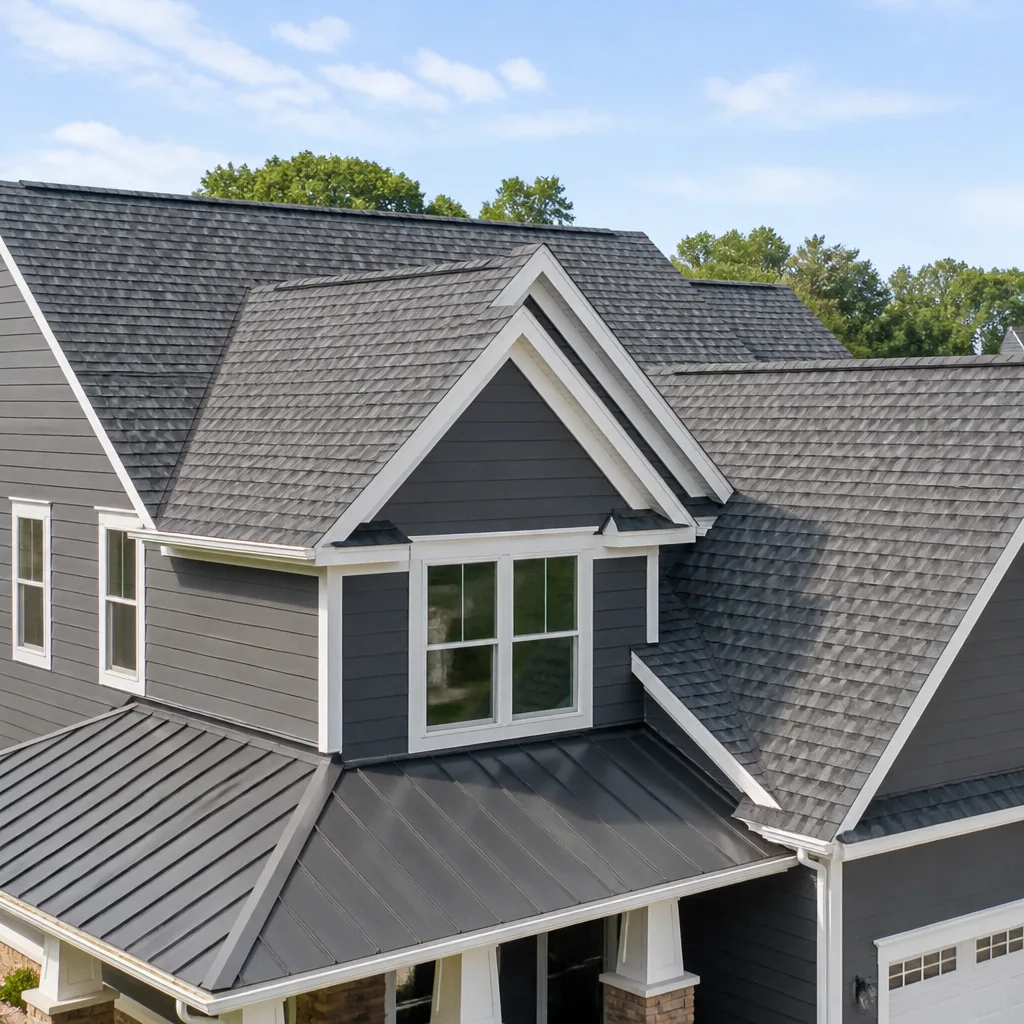 Architectural shingles
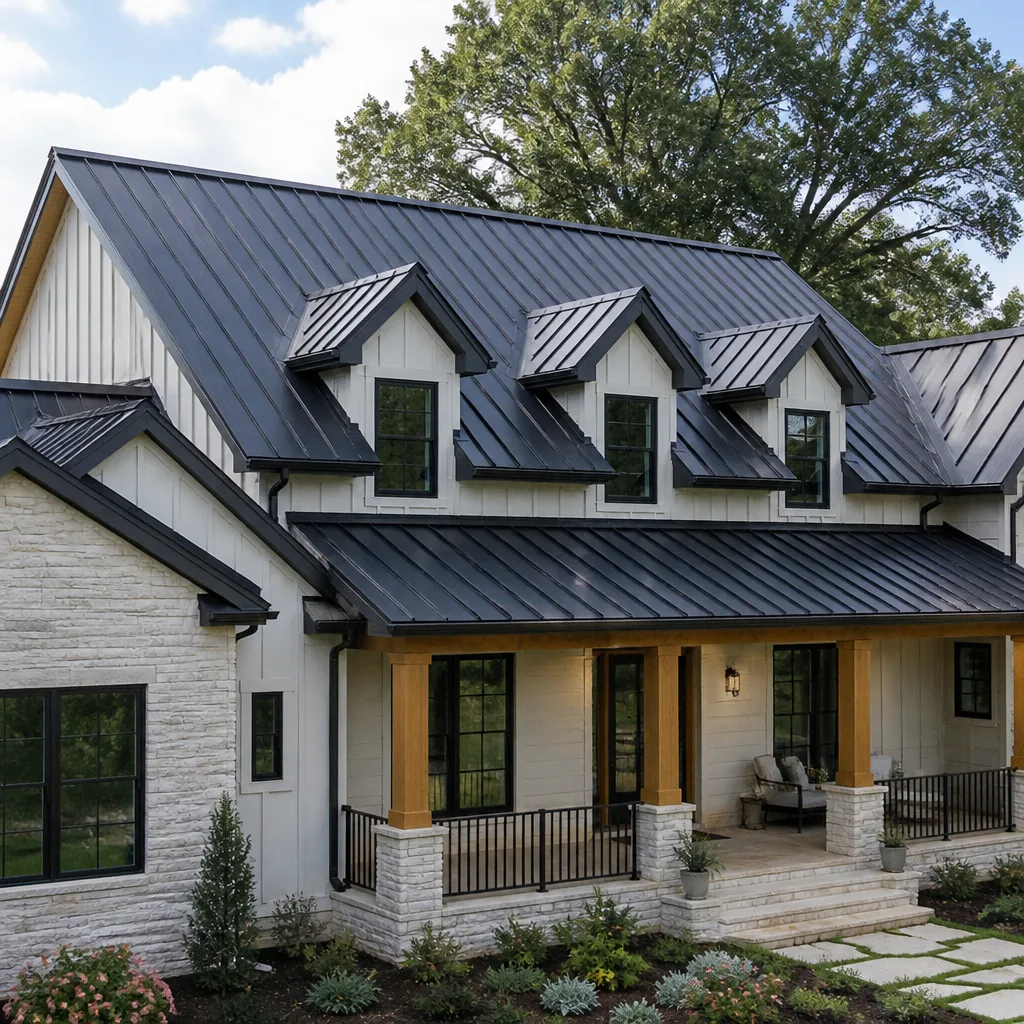 Metal roofing
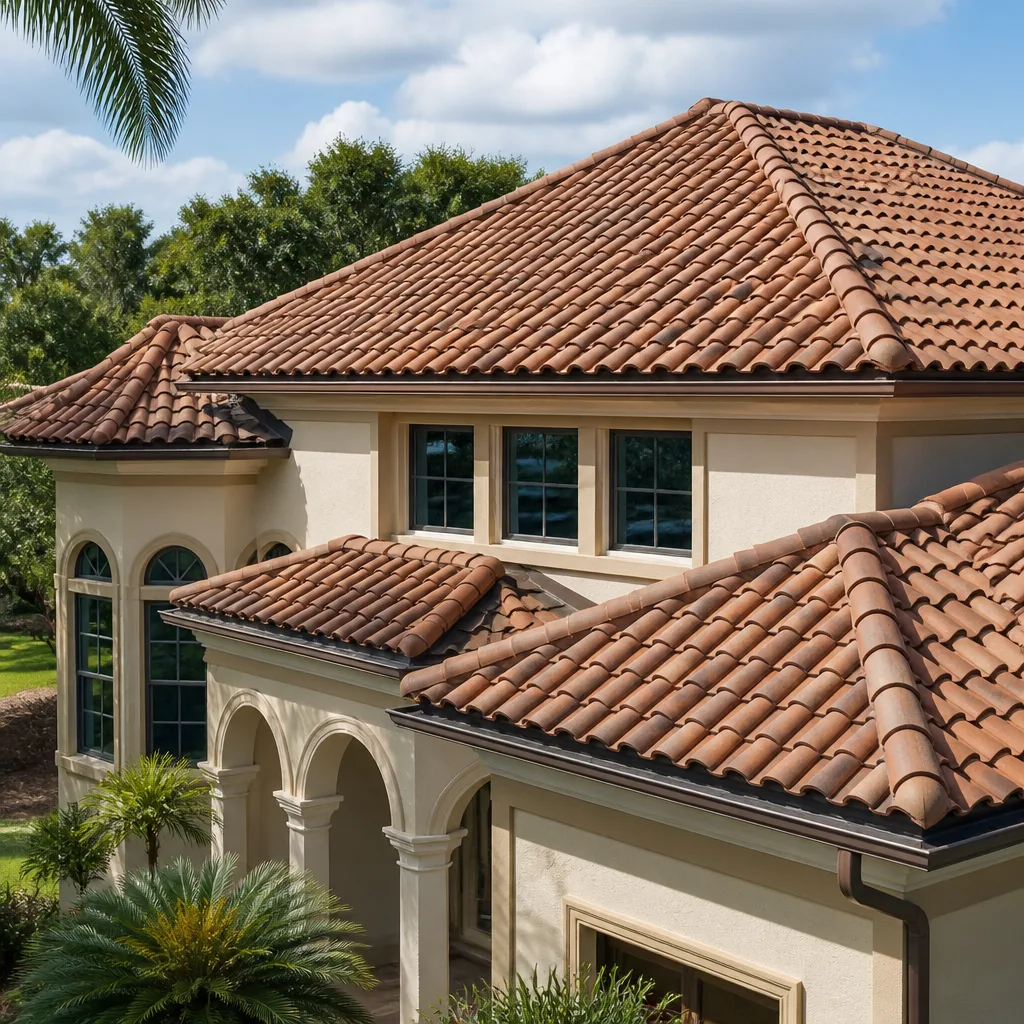 Tile roofing
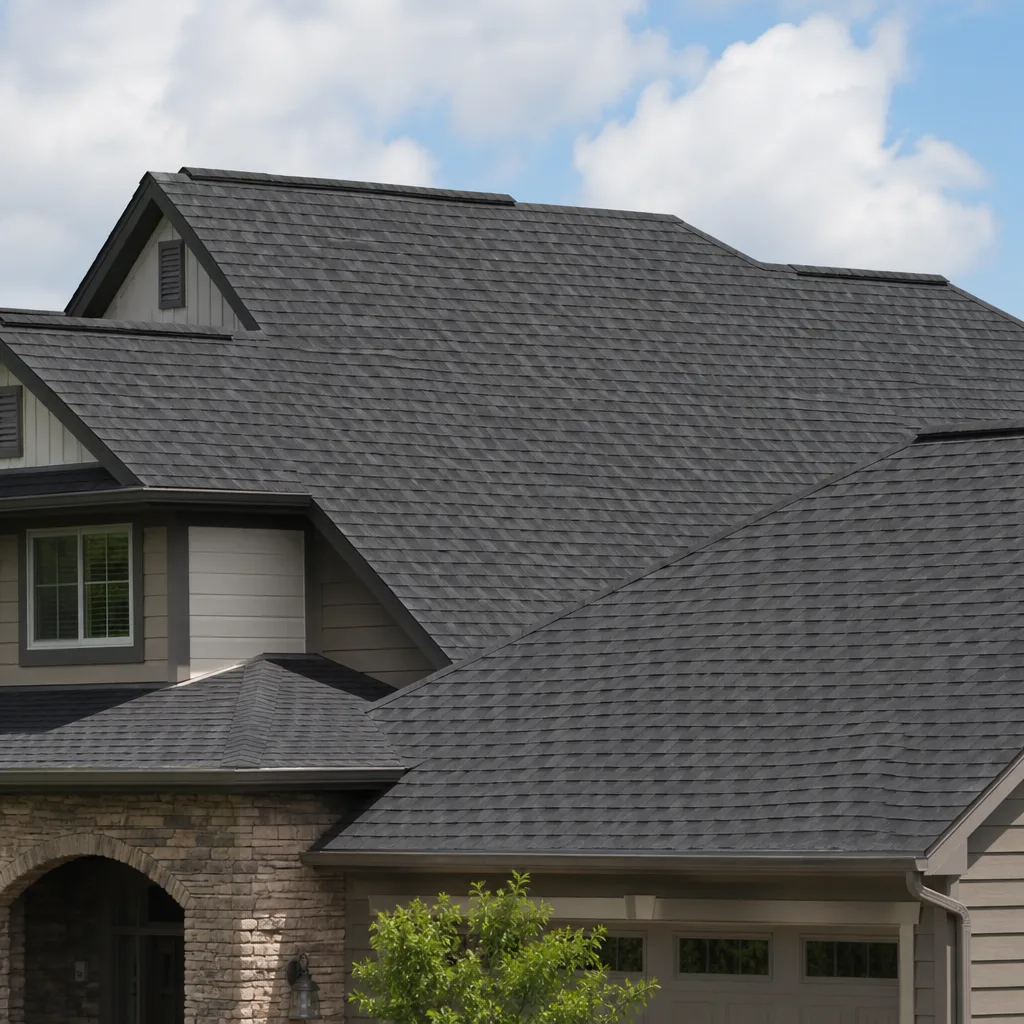 GAF
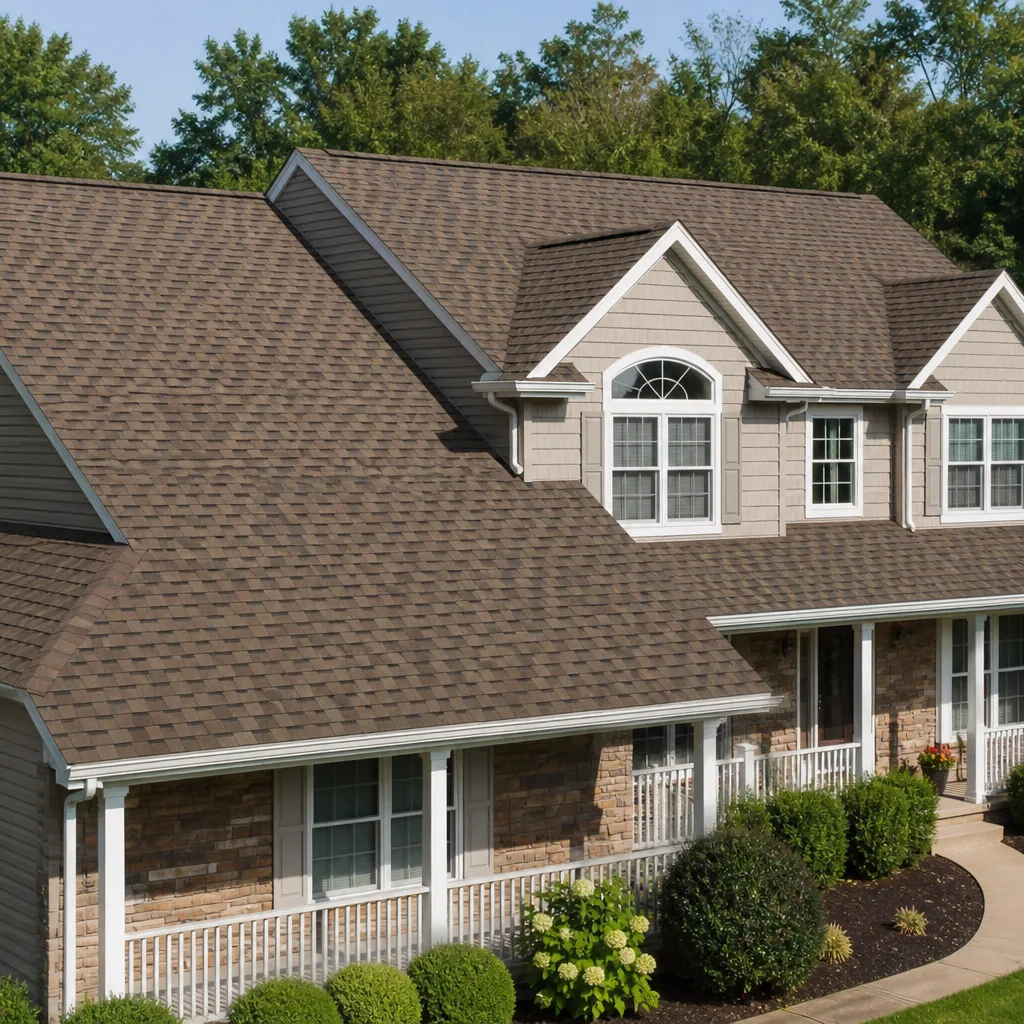 Owens Corning
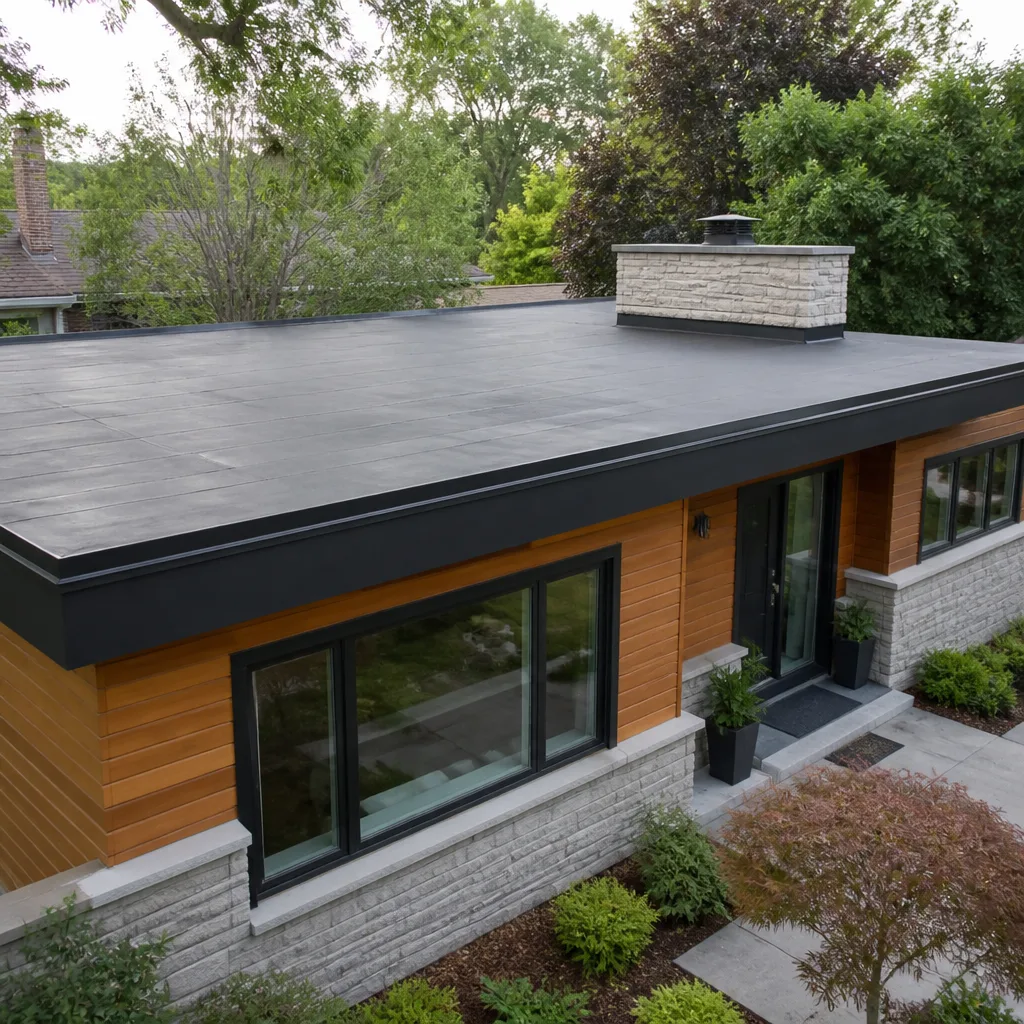 Flat & low-slope
Free roof inspection with deck photos before we talk money - GAF and Owens Corning certified installation
The Complete Roof Repair Guide for Spring Valley Homeowners
Most roof repair advice you’ll find online is written for places where rain is the main enemy. Spring Valley doesn’t work that way. Here, the sun does the first damage, the temperature swings do the second, and water only shows up at the end to finish the job. That order matters: a repair that treats a stain on the ceiling without addressing the UV-baked shingle or the cracked ridge cap above it will fail again, usually within a season. Over 300 days of UV exposure per year hammer this valley, more than Miami gets, and few homeowners realize the sun is staging the whole sequence. This guide maps repair decisions to how roofs actually fail in Spring Valley, so you can fix causes instead of chasing symptoms.
Styles & brands we work with
- Architectural shingles
- Metal roofing
- Tile roofing
- GAF
- Owens Corning
- Flat & low-slope
Quick Answer
Roof repair in Spring Valley should follow the desert’s failure sequence: UV degradation and granule loss first, thermal cracking at ridge caps next, flashing separation at penetrations after that, and water intrusion last, usually during monsoon season. Match the repair to the stage you’re actually in, not to the leak you happen to notice, and you’ll stop paying twice for the same problem.
Table of Contents
- Why Spring Valley Roofs Fail in a Different Order
- UV Degradation: The First Domino
- Thermal Cracking and the Ridge Cap Problem
- Flashing Separation and HVAC Curbs
- Monsoon Season: When the Damage Finally Shows
- Repair, Partial Re-Deck, or Full Replacement
- Permits and Clark County Inspection Checkpoints
- Flat and Low-Slope Roofs in Spring Valley
- Material Choices That Hold Up in Desert Heat
- Common Mistakes to Avoid
- When to Call a Professional
- Frequently Asked Questions
Why Spring Valley Roofs Fail in a Different Order
In a wet climate, roofs fail from the outside in: rain finds a gap, water gets behind the shingles, and rot spreads. In Spring Valley, roofs fail from the top down and the heat does most of the work before any water is involved.
Here’s the sequence we see repeatedly on roofs across the valley:
- UV degradation. The sun breaks down the asphalt and burns off the protective granules on shingles. This starts years before anything leaks.
- Thermal cracking. Daytime temperatures push past 115°F while nights drop fast. That expansion and contraction fatigues the shingles and sealants, and the first cracks usually appear at ridge caps and hip lines where the roof takes the most direct sun.
- Flashing separation. Metal flashing moves at a different rate than the roof around it. Sealant at HVAC curbs, vents, and wall junctions dries out and pulls away.
- Water intrusion. Monsoon season arrives, finds the cracks and gaps the first three stages created, and works its way in.
This is why a roof can look fine for a decade in Spring Valley and then leak in a single storm. The damage was there. The water just made it visible. Understanding this order is the core of any sensible roof repair strategy here, and it’s the reason an inspection should come before a repair decision, not after.
UV Degradation: The First Domino
Granules are the shingle’s sunscreen. They shield the asphalt underneath from UV rays, and once they’re gone, the asphalt dries out, cracks, and loses its ability to shed water. In Spring Valley, granule loss runs faster than in nearly any other U.S. climate because the UV index stays high year-round, not just in summer.
What to watch for:
- Granules in the gutters and at downspout outlets. Some loss is normal on a new roof. Heavy, ongoing accumulation on a roof older than a decade is a warning.
- Shingles that look chalky or faded. That dull, gray, sandpapery look is bare asphalt.
- Shingle edges that crumble when you press them. If a shingle cracks instead of flexing, the asphalt has lost its oils.
Not every shingle handles desert heat the same. Product lines built for high-heat zones, like GAF Timberline HDZ and Owens Corning Duration, are engineered with thicker asphalt and granule coverage that resist UV breakdown better than builder-grade shingles. That difference matters more in Spring Valley than it does in a mild climate because the roof faces a harsher sun for more hours every year.
By the time you notice granules collecting in the gutters, the shingle has already been degrading for years. That’s why we treat granule loss as the starting point of every assessment, not a footnote.
Thermal Cracking and the Ridge Cap Problem
The ridge cap is the most UV-exposed part of a pitched roof. It sits at the top, catches sun from both sides, and takes the full swing of daily temperature change. On Spring Valley roofs, ridge caps almost always crack before the field shingles below them do. Homeowners often miss it because the damage is at the peak, out of casual sight from the ground.
What thermal cracking looks like:
- Hairline cracks running across ridge cap shingles, often in a repeating pattern.
- Ridge cap shingles that have pulled loose at the edges or lifted.
- Hip lines where the cap shingles have separated from the roof surface.
- Sealant strips that have dried and let go along the ridge.
The repair for early-stage thermal cracking is straightforward: replace the failed ridge caps, re-seal the ridge line, and check the surrounding shingles for the same fatigue. Catching it at this stage is cheap. Ignoring it means the cracks open wider through another summer, and monsoon rain gets a direct path down the peak of the roof.
We’ve seen this pattern on roofs throughout the valley, from older ranch homes near Spring Valley to newer construction on the west side. The age of the roof matters less than how much direct sun the ridge gets and whether it was ventilated properly underneath.
Flashing Separation and HVAC Curbs
Flashing is the metalwork that seals the roof around anything that penetrates it: vents, chimneys, skylights, and HVAC curbs. In Spring Valley, HVAC curbs are the most common failure point because nearly every home has rooftop or near-roof mechanical equipment, and that equipment sits in full sun all day.
The problem is movement. Metal expands and contracts much more than shingles do. Every hot day and cool night works the sealant at the flashing seams, and over years it dries, cracks, and pulls away. Field leaks below the curb appear much later than the separation itself.
What a proper flashing check involves:
- Lifting the edge of the flashing to see whether the sealant underneath is still bonded.
- Checking the curb itself for cracks where it meets the roof deck.
- Inspecting the counter-flashing at wall junctions and around vent pipes.
- Re-sealing with a material rated for high-heat exposure, not standard caulk that fails in a year.
This is one of the repairs where doing it right the first time pays for itself. A flashing repair done with the correct materials and proper overlap will outlast a quick caulk-and-go job several times over in this climate.
Monsoon Season: When the Damage Finally Shows
Spring Valley’s rainy season is short and intense. When the monsoon storms arrive, they dump a lot of water in a short window onto roofs that have spent months or years drying out under the sun. That’s when cracks, separated flashing, and worn shingles finally let water in.
What we see during and after monsoon season:
- Interior stains that appear suddenly, often far from where the actual breach is.
- Water pooling at low spots created by sagging decking.
- Leaks around vents and curbs that tested dry all spring.
- Ceiling damage that starts as a small spot and grows fast once the roof is wet.
The mistake many homeowners make is waiting for a leak to call anyone. By then, the roof has been failing through the whole UV and thermal-cracking stages, and the repair has to cover both the cause and the water damage. A documented inspection before the season starts usually catches these breaches while the repair is still small.
The timing of a repair matters as much as the repair itself. Getting the roof assessed in the dry months gives you a plan before the storms arrive, rather than an emergency call during one.
Repair, Partial Re-Deck, or Full Replacement
The usual rule of thumb in roofing is that once a third of the roof needs work, a full replacement is usually more economical. In Spring Valley, that threshold comes sooner because the whole roof has been aging under the same sun. If a third of the shingles are failing from UV and thermal damage, the rest are not far behind, and two or three staged repairs in a season cost more than a single replacement.
How we triage it:
- Single-area repair. The failure is localized, usually at flashing, a ridge cap, or a small cluster of shingles, and the rest of the roof is still in good shape. Best for roofs under 10 to 12 years old or recently installed.
- Partial re-deck. One section or slope is failing while the rest is sound. Useful when a roof has a single sun-blasted area or the damage is confined to one element like the ridge line.
- Full replacement. Widespread granule loss, cracking across most of the field, or a roof already at or past its expected service life for this climate. At that point a repair stops being cost-effective.
A documented inspection gives you the evidence to make that call honestly. You can weigh the cost of a repair against the cost of a roof replacement with actual findings in hand, rather than a contractor’s pressure or a guess.
Permits and Clark County Inspection Checkpoints
Repair work in Spring Valley falls under Clark County jurisdiction, and the permit picture depends on what’s being done. Small repairs like replacing individual shingles or re-sealing flashing typically don’t require a permit. Structural work, re-decking, or anything that changes the roof assembly usually does.
What that means for a homeowner:
- Ask before the job starts. Any roofer should tell you plainly whether the repair needs a permit and pull one if it does. If they can’t or won’t, that’s a warning sign.
- Inspection checkpoints apply to repairs too. A permitted repair will get inspected for the deck attachment, the flashing installation, and the finished roofing layer, not just new installs.
- Documentation matters for resale. A permitted repair with an inspection record protects you if you sell, especially on a roof that’s already in its second half of life.
- Your city and county rules govern the specific job. Confirm with Clark County’s building department for your address before scheduling any structural repair.
Our team coordinates permits as part of the repair, and we’ll tell you upfront whether your job needs one. It’s part of treating a roof repair as a proper trade job, not a quick patch.
Flat and Low-Slope Roofs in Spring Valley
Plenty of Spring Valley homes, especially the ranch-style houses common throughout the valley, have flat or low-slope sections. That changes the repair protocol. Water doesn’t run off a flat roof; it sits until it drains or evaporates, and in this climate evaporation happens faster than in most places, which creates its own punishment: ponded water that dries quickly leaves the membrane under it baking in direct sun with no shade and no runoff protection.
What works on flat roofs here:
- Modified bitumen patches hold up well when they’re installed with a heat-resistant surfacing, because the material is built to tolerate high surface temperatures.
- TPO welded patches are another solid choice for flat sections, provided the seams are heat-welded, not glued. Glue fails in the heat.
- Keep drains clear. A blocked drain on a flat roof turns a small repair into a deck replacement fast, because water has nowhere to go.
The pitches matter too. A low-slope section draining toward a pitched field can funnel a monsoon down onto the shingles below it, which stresses the transition point every time it rains. That junction needs proper flashing and a repair that accounts for both roof types, not a patch that treats them as one.
Material Choices That Hold Up in Desert Heat
Material choice in Spring Valley comes down to which products were engineered for sustained heat and UV exposure. That’s not marketing. Surface temperatures on a dark asphalt roof in July can run far above the air temperature, and shingles rated for milder climates age faster under that load.
When we’re selecting repair or replacement materials, we work from seven brands: GAF, CertainTeed, Owens Corning, IKO, Atlas, Tamko, and Boral. That breadth means the recommendation fits your roof’s profile and your budget rather than the one product a single-supplier contractor happens to carry. A few things we weigh in that conversation:
- Heat-zone ratings. Some shingle lines, like GAF Timberline HDZ and Owens Corning Duration, are built with thicker asphalt and heavier granule coverage that resist UV breakdown better.
- Budget tier. Value-priced lines from IKO or Atlas can be the right answer for a lower-slope section that won’t see full sun, while premium lines make more sense on a west-facing roof that takes the worst of the afternoon heat.
- Product mix. When a roof has both pitched and flat sections, the right answer is often a mixed-material repair that uses shingles for the field and a welded membrane for the low-slope part.
There’s no single “best” material in Spring Valley. There’s the material that matches the sun exposure on each slope, and that’s the conversation a good inspection should start.
Common Mistakes to Avoid
- Chasing the stain instead of the cause. A ceiling stain is the last thing in the failure chain, not the first. Fixing the interior and ignoring the roof will bring the problem back at the next monsoon.
- Using standard caulk on flashing. Ordinary sealant dries out fast in Spring Valley’s heat. High-heat flashing sealant costs a little more and lasts far longer.
- Skipping the ridge cap check. Cracks at the peak are easy to miss from the ground, and they’re often the first failure. Get up on the roof or get it inspected, but don’t assume the field shingles are the whole story.
- Treating flat and low-slope sections like pitched roofs. A shingle patch on a low-slope section won’t hold water the way the rest of the roof does. Flat sections need a membrane rated for ponding and heat.
- Repairing more than a third of a sun-aged roof. If that much of the roof is failing, staged repairs cost more over time than a replacement. Fresh shingles on top of an exhausted roof don’t stop the underlying problem.
- Letting a contractor skip the permit. Repairs that need a Clark County inspection and don’t get one can leave you exposed at resale. Confirm the permit before work starts.
- Choosing a material before the inspection. Picking a brand before the roof has been assessed often leads to the wrong product for the wrong slope. Inspect first, then decide.
When to Call a Professional
Some roof problems are obvious, and some only look obvious once you’re on the roof. Call a professional when you’re dealing with cracks at or near the ridge line, water stains on a ceiling or wall, flashing that’s visibly pulled away at an HVAC curb, or any shingle damage on a low-slope section. Also call if your roof is over 15 years old in this climate and you haven’t had it looked at in the past few years. Spring Valley’s sun ages roofs faster than the national averages suggest, and a documented inspection is the cheapest way to know whether you’re facing a repair, a partial re-deck, or a replacement. Roofing Spring Valley offers free estimates in Spring Valley. Call (877) 851-0738. We answer 24/7. Fast dispatch from 7am to 7pm, Sunday through Friday. We work with seven leading material brands and give you a written estimate before any work begins.
Frequently Asked Questions
Repair is usually the answer if the failure is localized to flashing, ridge caps, or a small area of shingles and the rest of the roof still has life. Replacement is usually the answer if granule loss and cracking cover more than about a third of the roof or the roof is past its expected service life for this climate. An inspection with documented findings gives you the evidence to decide. Call (877) 851-0738 for a free estimate and we’ll walk you through both options.
Because the damage was there before the rain, and the water just made it visible. In Spring Valley, UV wear and thermal cracking open paths for water that stay hidden in the dry months. Once monsoon storms arrive, those paths finally let water in. That’s why we look for the sun damage and thermal cracks first, not just the leak itself.
Ridge caps and hip lines are the most common because they take the most direct UV and the widest temperature swing. HVAC curbs and vent flashing run a close second because the metal moves more than the shingles around it. Field shingles usually fail later than these, following the sun’s lead.
Small repairs like replacing individual shingles or re-sealing flashing typically don’t. Structural work, re-decking, and repairs that change the roof assembly usually do. Confirm the specific rule with Clark County’s building department for your address before work starts. Any contractor should tell you plainly whether a permit is required and pull it if it is.
Product lines engineered with thicker asphalt and heavier granule coverage, like GAF Timberline HDZ and Owens Corning Duration, resist UV breakdown better than builder-grade shingles. The right choice for your roof also depends on slope, sun exposure, and budget, which is why we discuss material selection after the inspection, not before.
Most single-area repairs, like a ridge cap replacement or flashing repair, can be completed in a day. Larger repairs or partial re-decks may take longer depending on the scope and weather. We give you a written estimate with the expected timeline before any work starts, and the final price is set by that estimate.
The Bottom Line
Spring Valley roofs fail in a specific order, and fixing them properly means following that order instead of reacting to whichever leak shows up last. UV damage comes first, thermal cracking at the ridge and flashing comes next, and monsoon water intrusion is what finally makes it visible. A documented inspection before you commit to any repair shows you which stage you’re actually in. From there, the right products from the seven leading brands we install, coupled with proper Clark County permitting and inspection, give you a roof repair that addresses the cause rather than the symptom. Start with the inspection, and the rest of the decision gets easier.
Ready to find out what your roof actually needs? Call (877) 851-0738 for a free estimate. We install products from seven of the industry’s leading brands, roofing is the only trade we work in, and our technicians have up to 13 years of experience. Learn more about what we do and why we focus only on roofs at Roofing Spring Valley.
Written by the team at Roofing Spring Valley.
See the difference
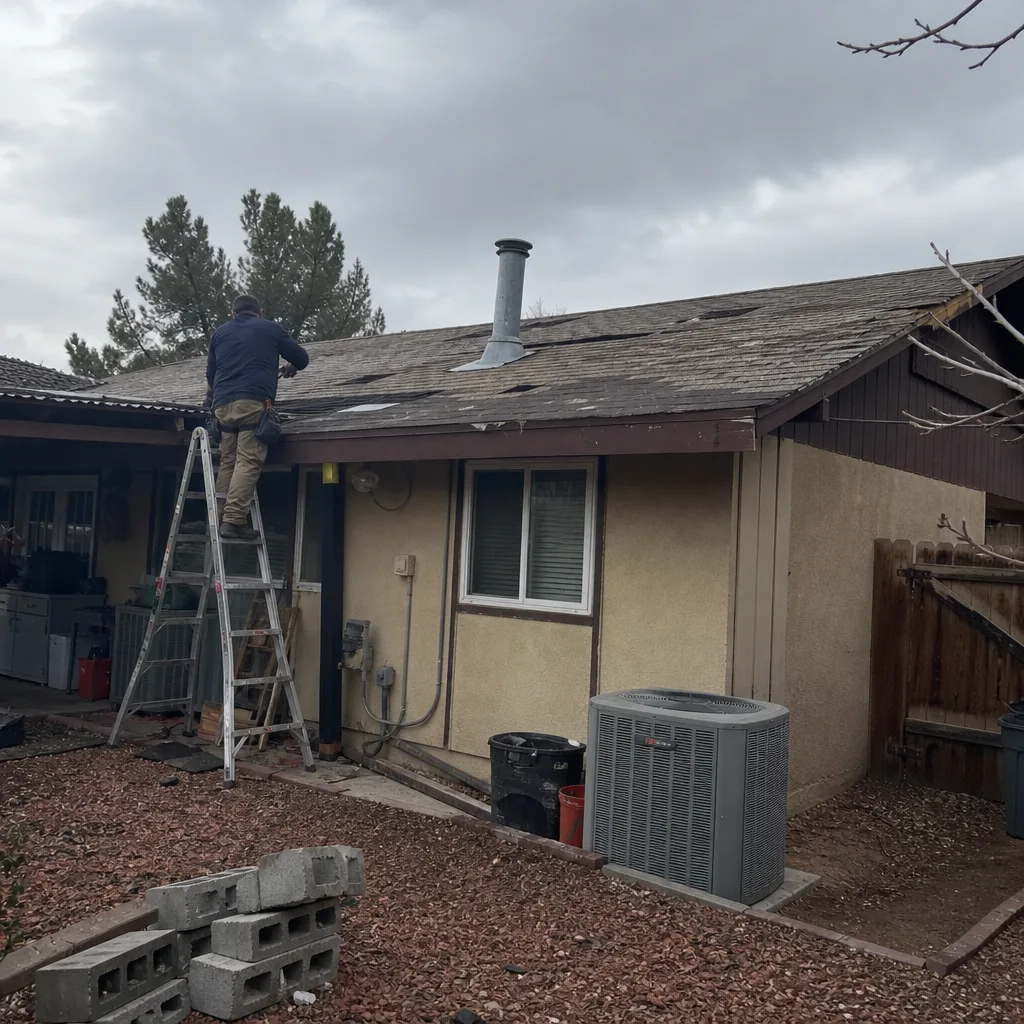 Before
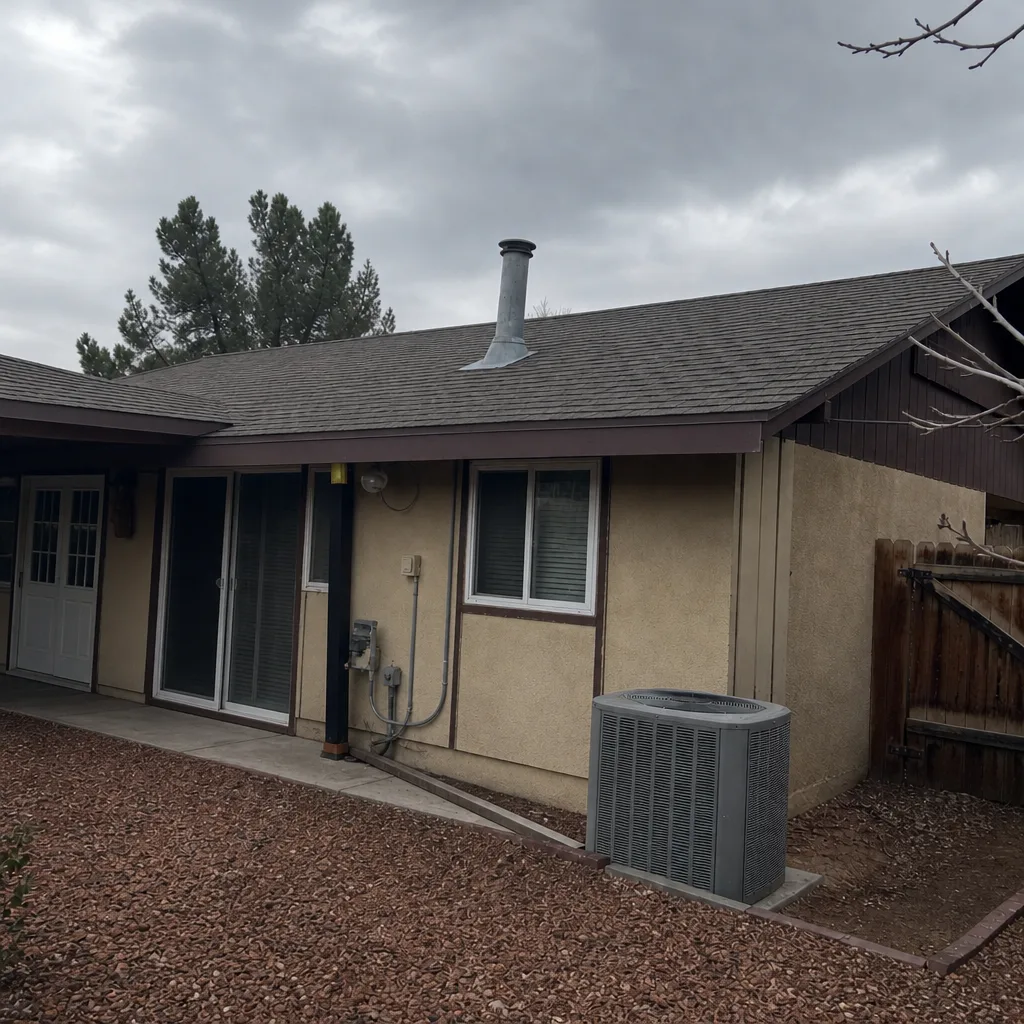 After
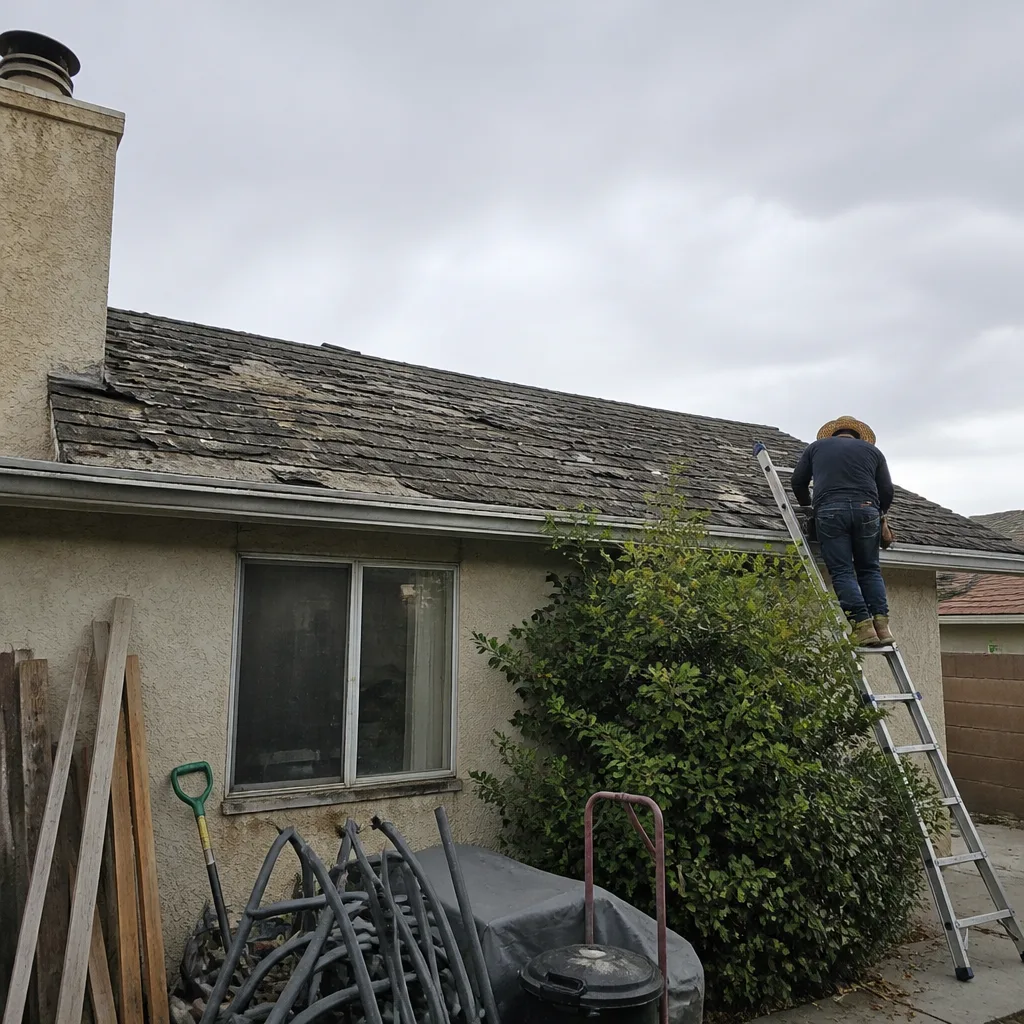 Before
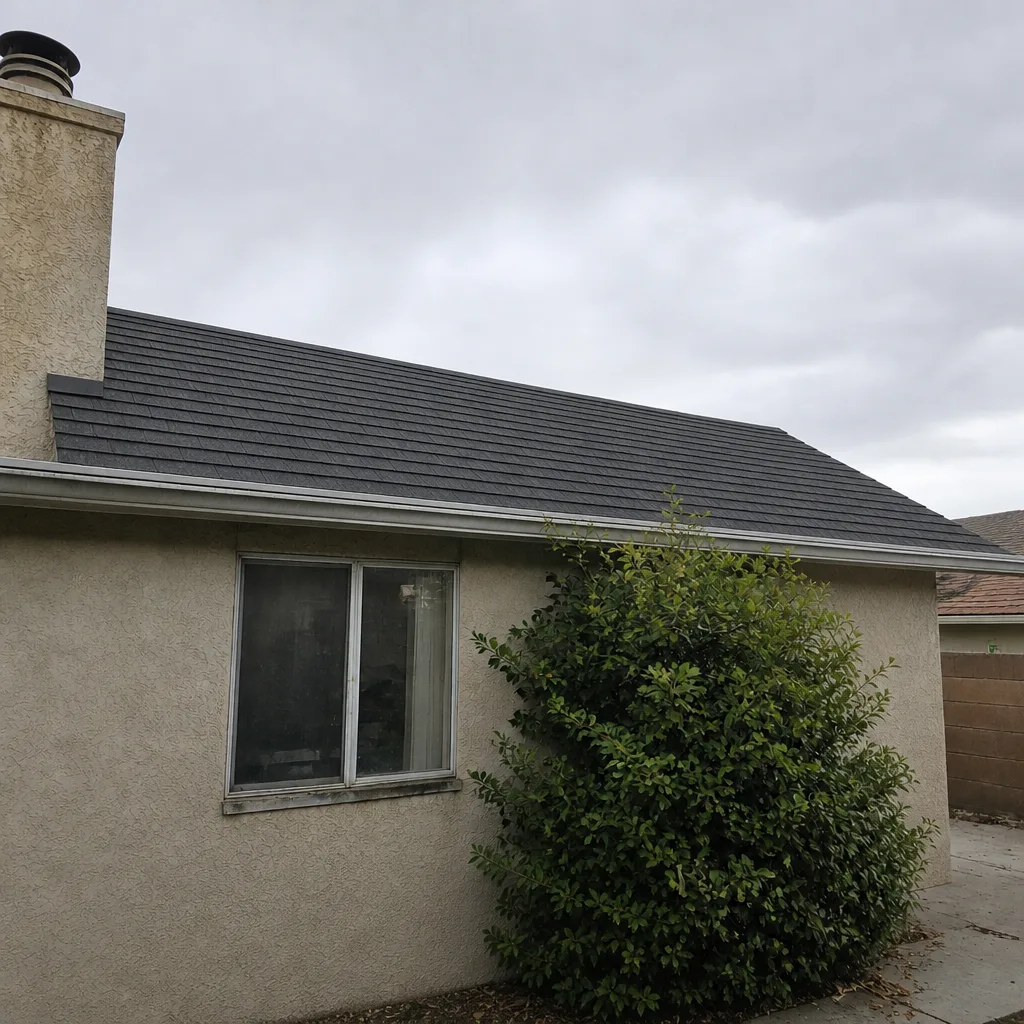 After
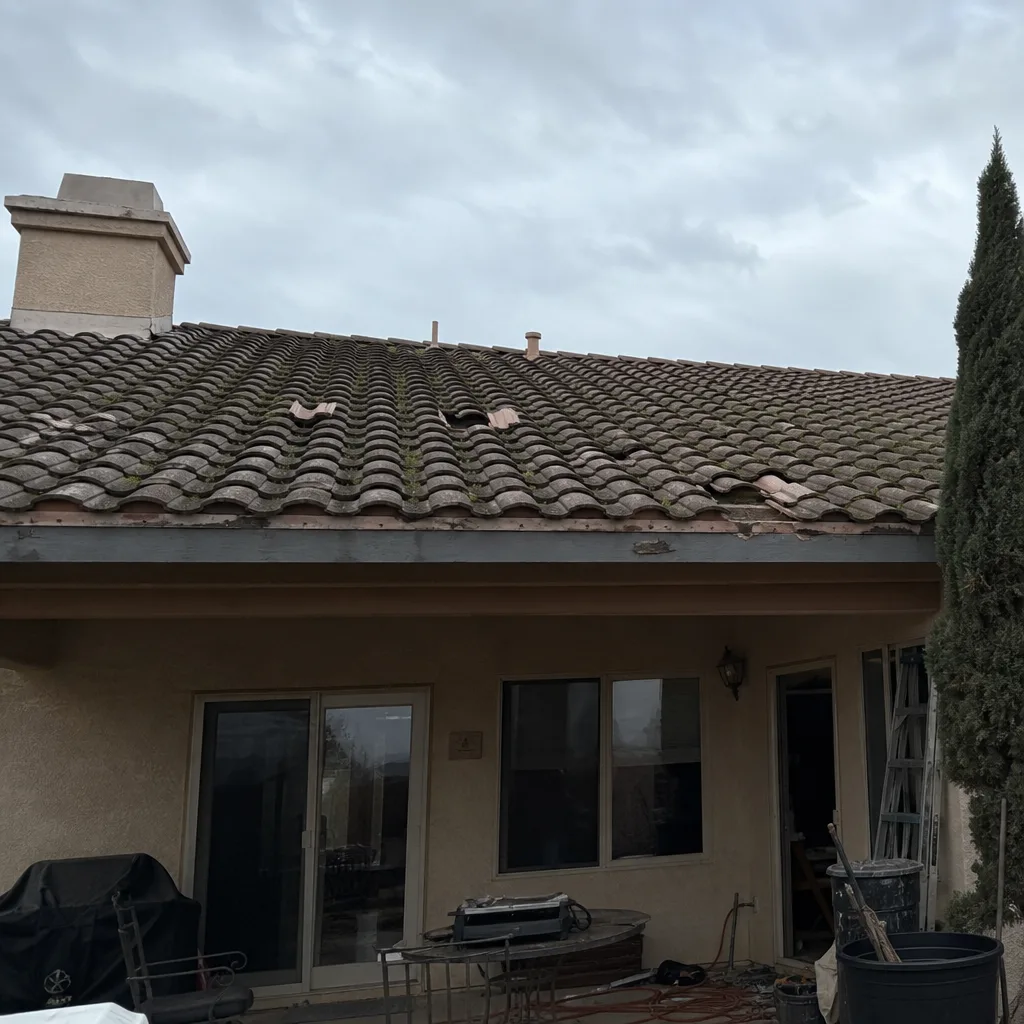 Before
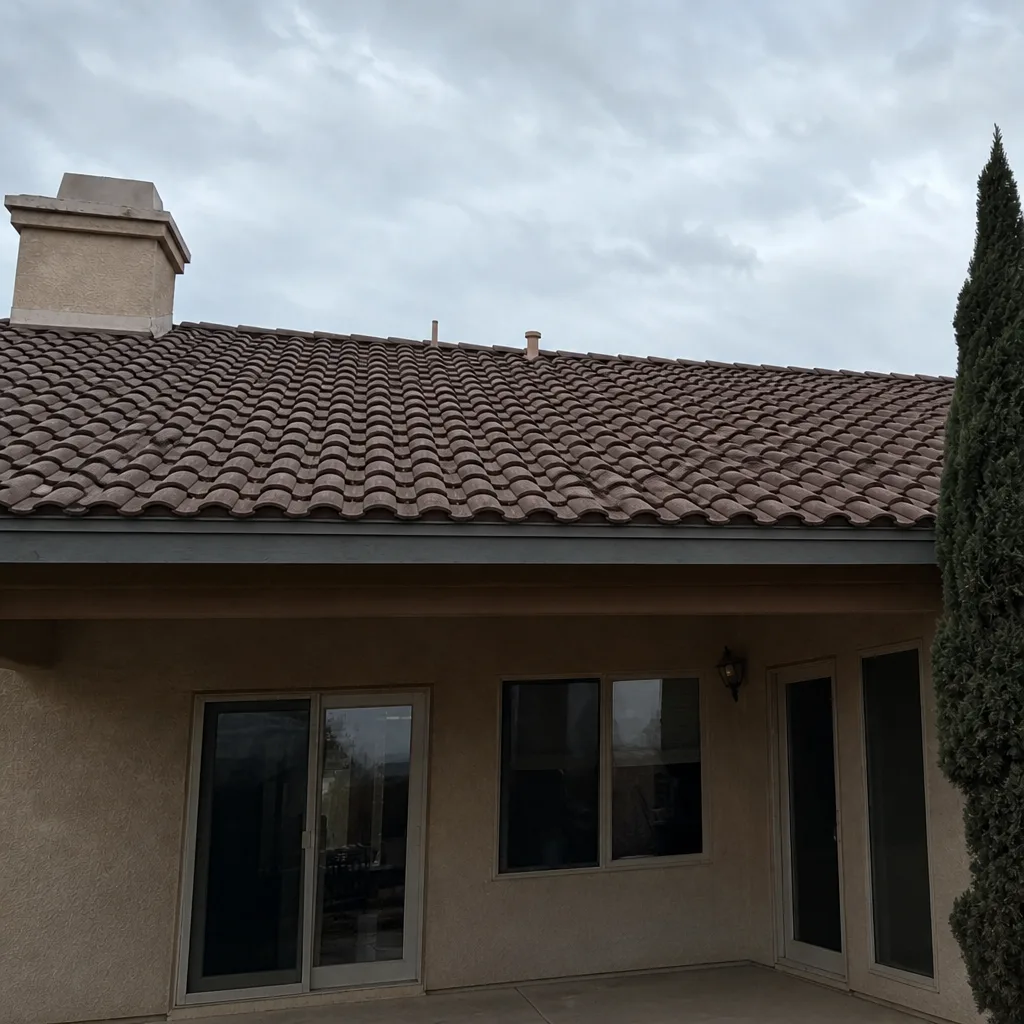 After